
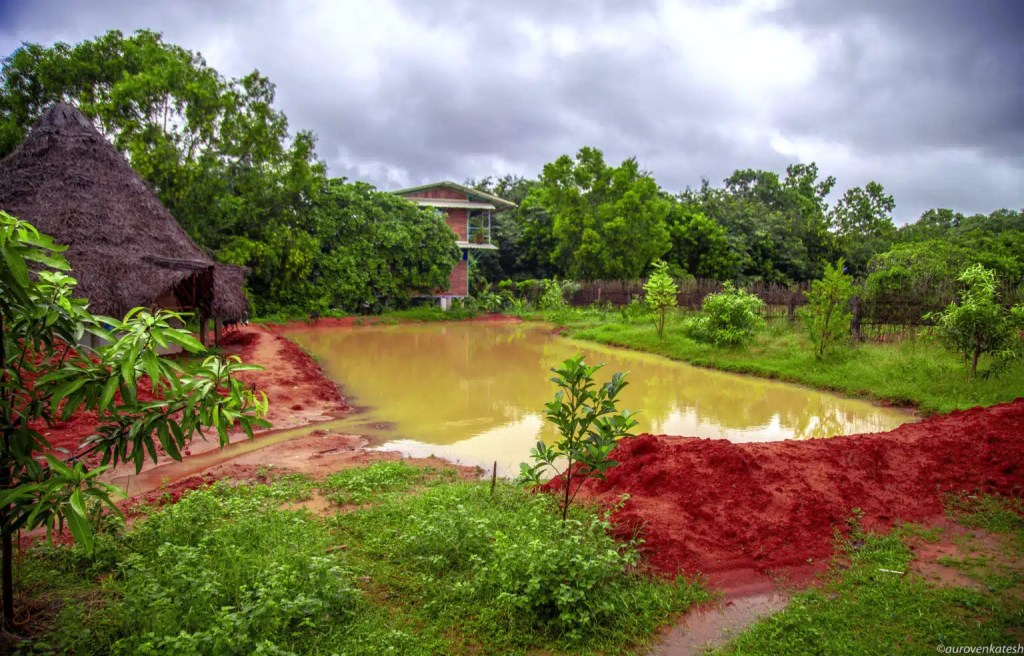
The JOI project is part of Auroville, an international township in Tamil Nadu, India, and lies within the landscape of the tropical dry evergreen forest (TDEF). Its ecological work connects to the larger community’s long-standing reforestation initiatives, which have transformed degraded lands into thriving forest ecosystems. Though modest in scale, our sub-project is part of a larger 3,930-acre Auroville reforestation initiative—a 50-year restoration effort aimed at reviving a desertified landscape that was once a thriving TDEF.
Historical records confirm that this biome supported wildlife such as elephants and tigers (Nagy & Szabó, 2019). However, by 1825, widespread deforestation had cleared much of the land for settlements, while colonial land policies accelerated habitat loss (Blanchflower, 2005; Meher-Homji, 1992; Parthasarathy et al., 2008; Wikramanayake, 2002; Auroville, n.d.; Regenerative Auroville, 2010).
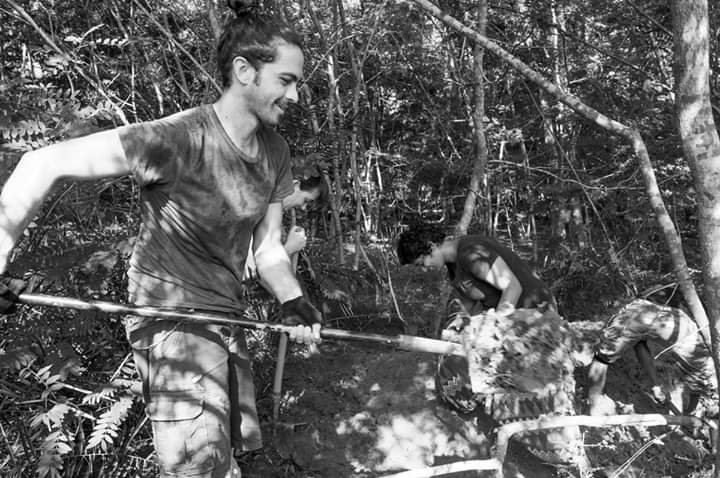
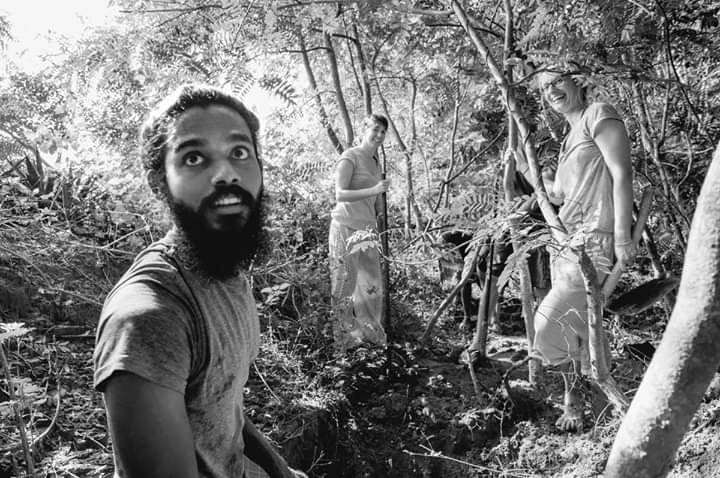
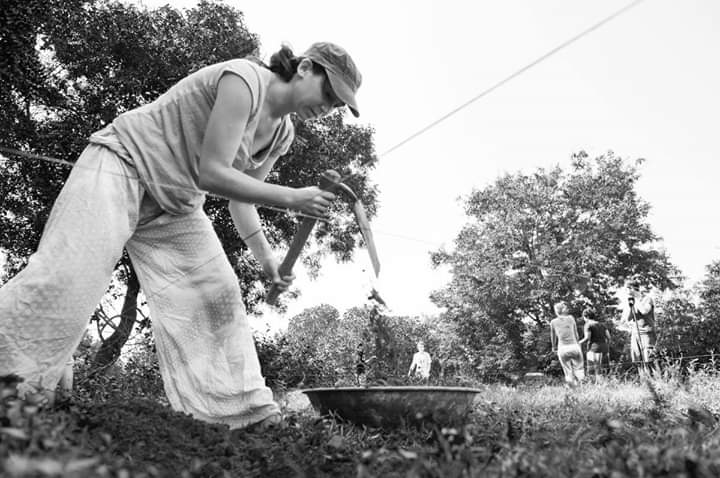
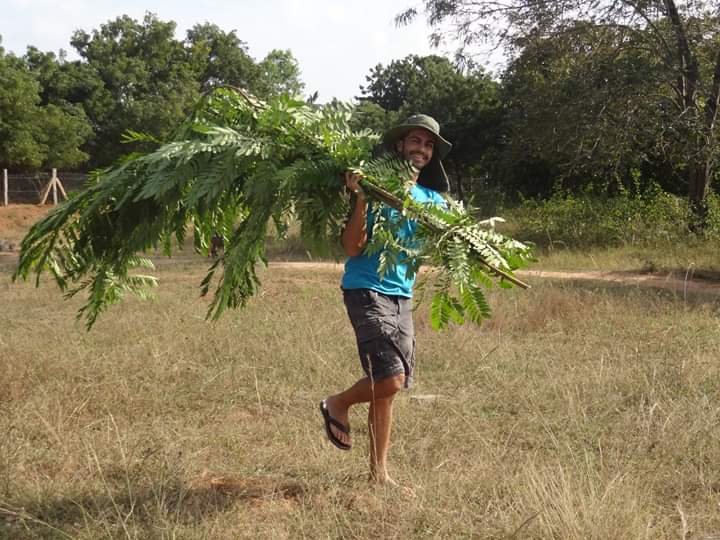
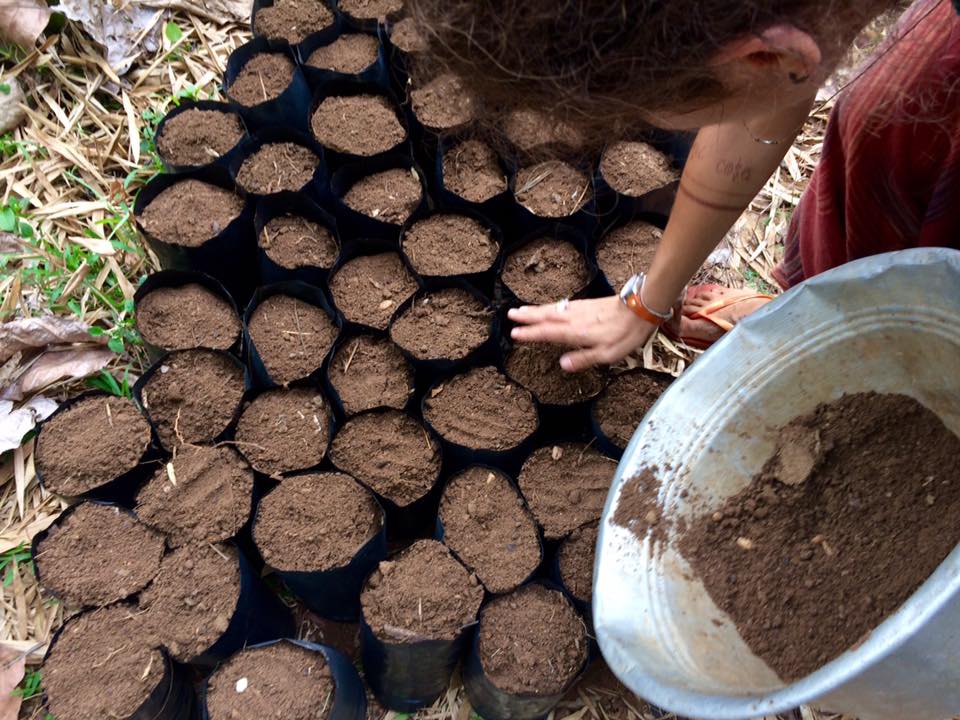
Principles of Reforestation
Auroville’s reforestation ethos is rooted in restoring ecological balance and strengthening resilience. The community focuses on:
- Biodiversity restoration through the propagation of native TDEF species.
- Soil regeneration with composting, mulching, and erosion control techniques.
- Water management via rainwater harvesting, contour bunds, and aquifer recharge.
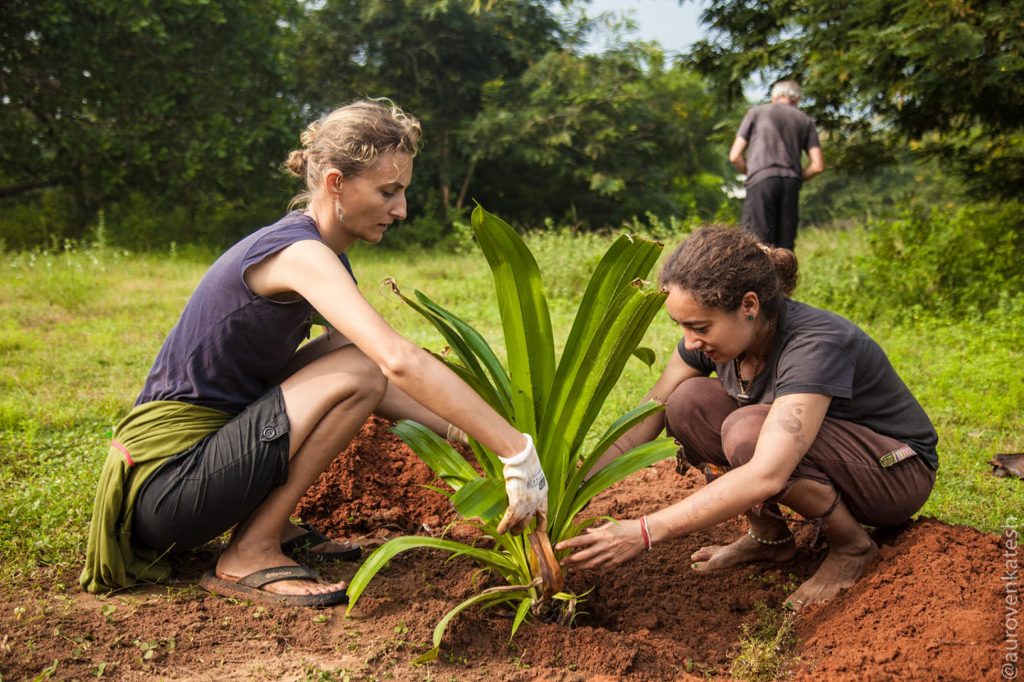
- Community participation, engaging residents directly in restoration.
- Education and awareness to instil ecological stewardship across generations.
- Renewable energy integration to reduce the footprint of restoration work.
Achievements and Practices
Over five decades, Auroville has demonstrated the transformative potential of reforestation:
- Protection and propagation of indigenous TDEF flora.
- Erosion control with bunds, check dams, and vegetated watercourses.
- Creation of biodiversity parks for conservation and learning.
- Use of agroforestry systems blending restoration with sustainable livelihoods.
- Decision-making rooted in ecological feedback and adaptive practice.
Restoration Efforts: Local Solutions to Global Biodiversity Challenges
In six years, our sub-project has created habitat for a range of bird species, including sunbirds, bee-catchers, woodpeckers, and kingfishers. Table 1 outlines the IUCN status, population trends, ecological roles, and restoration benefits of selected resident species, highlighting the impact of community-led initiatives in linking local restoration with global biodiversity goals.
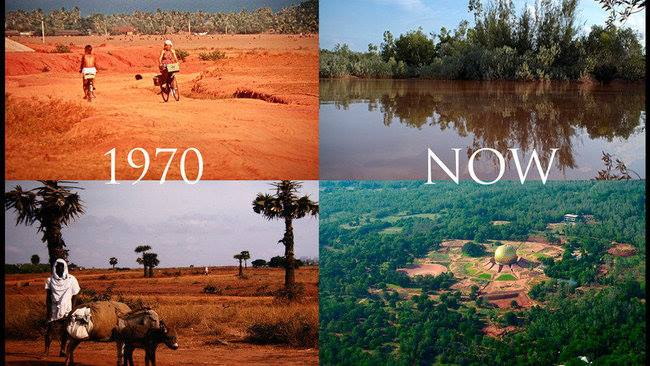
Figure 1: A comparison of the Auroville region before 1970, depicted as a barren, eroded, and desertic landscape, and after the restoration efforts, showcasing a vibrant area covered with forests and water bodies. Source: www.auroville.org
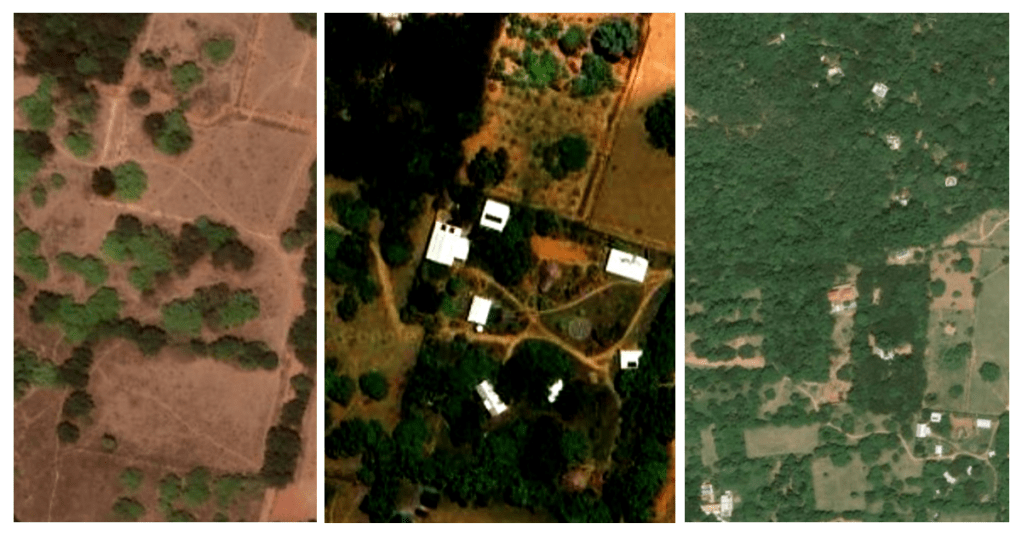
Figure 2: Landscape Restoration Progression in South-East India: A time-series from Google Earth (captured in February to minimise seasonal variation) illustrates our sub-project’s ecological recovery. The left panel shows the site in February 2018, prior to restoration. The middle panel, from February 2024, demonstrates the effects of water catchment techniques and tree planting. The right panel situates our work (south-bottom) alongside the 30-year-old restored site known as Aurodam (north-top), underscoring ecological connectivity.
Table 1: This table lists bird species observed in our restored habitat, detailing their global IUCN status, IUCN population trend, ecological role, and inferred restoration impact. The Population Trend reflects global data and may not represent local changes, as site-specific data is unavailable. Ecological Role highlights each species’ contribution to ecosystem processes and ecosystem services (e.g., pollinator, insectivore). Benefits from Restoration indicates potential advantages or challenges based on species’ ecological needs. Data sources include IUCN and BirdLife International for global status and trends, while restoration impacts are speculative based on typical habitat requirements. Sources: IUCN Red List; https://theworldsrarestbirds.com; https://animalia.bio
| Common Name | Scientific Name | IUCN Status | Population Trend | Ecological Role & Ecosystem Services Provided | Benefits from Restoration |
| Jungle Babbler | Argya striata | Least Concern (LC) | Stable | Insectivore. Crucial role controlling insect populations. | Increased vegetation supports food availability. |
| Indian Pitta | Pitta brachyura | Least Concern (LC) | Decreasing | Ground Forager. Integral role in maintaining the ecological balance. | Increased foraging opportunities. |
| Common Hawk – Cuckoo | Hierococcyx varius | Least Concern (LC) | Stable | Insectivore – Brood Parasite. Pest controller (e.g. Eupterote mollifera) | Increased habitat for perch, aerial and ground hunting. Increased food supply. |
| Black Drongo | Dicrurus macrocercus | Least Concern (LC) | Unknown | Insectivore. Pest controller. | Increased habitat for nesting and perch, aerial and ground hunting. Increased food supply. |
| Ashy Drongo | Dicrurus leucophaeus | Least Concern (LC) | Unknown | Insectivore. Pest controller. | Increased habitat for nesting, perch, aerial and ground hunting. |
| Indian Golden Oriole | Oriolus kundoo | Least Concern (LC) | Unknown | Foraging, Frugivore, Seed Disperser. | Although not a resident species, it has been seen feeding on fruits. |
| Hoopoe | Upupa epops | Least Concern (LC) | Decreasing | Insectivore: primarily large insects and their larvae and pupae | Increased habitat offering perches, shade, nest-sites and accessible food. |
| White – breasted Kingfisher | Halcyon smyrnensis | Least Concern (LC) | Increasing | Predator (Fish, Insects, reptiles, amphibians, small mammals). | Increased available prey: insects, snails, crustaceans, earthworms, frogs and toads, lizards, snakes, voles, mice. |
| Western Koel | Eudynamys scolopaceus | Least Concern (LC) | Stable | Seed disperser, Frugivore, Brood Parasite | Availability of fruiting trees supports stable population |
| Spotted Owlet | Athene brama | Least Concern (LC) | Stable | Nocturnal predator. Control of prey populations. Vital to ecosystem balance. | Restoration supports hunting grounds (insects are approximately 70% of their diet, Small Vertebrates 30%). Population of the species increased. |
| Purple Sunbird | Cinnyris asiaticus | Least Concern (LC) | Stable | Pollinator | Abundant flowering plants aid in sustaining stable numbers. |
| Loten’s Sunbird | Cinnyris lotenius | Least Concern (LC) | Stable | Pollinator | Abundant flowering plants aid in sustaining stable numbers. |
| Purple – rumped Sunbird | Leptocoma zeylonica | Least Concern (LC) | Decreasing | Pollinator | Abundant flowering plants aid in sustaining stable numbers. |
| Indian Paradise Flycatcher | Terpsiphone paradisi | Least Concern (LC) | Stable | Insectivore | Benefiting from increased tree cover for foraging |
| Blue – throated Blue Flycatcher | Cyornis rubeculoides | Least Concern (LC) | Stable | Insectivore. Adaptable Foraging tactics e.g. perching and pouncing | Increased food resources. Increased habitat (thrives in areas of increased humidity) |
| Blue – faced Malkoha | Phaenicophaeus viridirostris | Least Concern (LC) | Deceasing | Forager. Predator (Insects, Small Vertebrates). Seeds (disperser) when insects are scarce. | Dense vegetation aids camouflage and foraging. |
| Oriental Magpie Robin | Copsychus saularis | Least Concern (LC) | Stable | Insectivore. Occasionally eats fruits, seeds, nectar, and small vertebrates | Increased food resources. Increased habitat. |
| Common Indian Myna | Acridotheres tristis | Least Concern (LC) | Increasing | Omnivorous: insects, fruits (seed dispersers). Native sp. here, but one of the world’s worst Invasive Alien Species | Increase habitat and nest-sites. Increased vegetation supports food availability. |
| Parakeet | Alexandrinus krameri | Least Concern (LC) | Increasing | Disperser, feeding on seeds, nuts, fruits, flowers, buds, and nectar. Occasionally insectivore. | Seen primarily of flowering trees and feeding on tree canopy: Increased habitat. |
| Shikra Hawk | Accipiter badius | Least Concern (LC) | Stable | Predator. Prey population control. | Increased food availability. |
| Tailor Bird | Orthotomus sutorius | Least Concern (LC) | Stable | Foraging Behavior. Insectivore. | Increased Nesting sites. Increased food availabitlity. |
| Black – rumped Flameback Wood pecker | Dinopium benghalense | Least Concern (LC) | Deceasing | Forage from the ground to the canopy. Insectivore. | Increased Nesting sites. Increased food availabitlity. |
| Rufous Treepie | Dendrocitta vagabunda | Least Concern (LC) | Deceasing | Seed disperser. Insectivore. | Canopy nesting sites. Increased food availability. |
| Red – vented Bulbul | Pycnonotus cafer. | Least Concern (LC) | Increasing | Seed disperser. Insectivore. | Increased food availability and habitat. |
References
Auroville (n.d.) The Early Landscape of Auroville. Available at: https://auroville.org/page/the-early-landscape-of-auroville-126/716ba7fe-7b5a-4505-b58f-fbfeea3a3cf1/galleries?index=3 [Accessed 23 October 2024].
Blanchflower, P. (2005) ‘Restoration of the Tropical Dry Evergreen Forest of Peninsular India’, Biodiversity, 6(1), pp. 17–24. doi: 10.1080/14888386.2005.9712755.
Meher-Homji, V.M. (1974) ‘On the origin of the tropical dry evergreen forest of South India’, International Journal of Ecology and Environmental Sciences, 1, pp. 19–39.
Nagy, B. and Szabó, Z. (2019) ‘Introduction to the Green Belt of Auroville: A detailed description on how its actual practices contribute to the UN SDGs’, Proceedings of the Fábos Conference on Landscape and Greenway Planning, 6, Article 27. doi: https://doi.org/10.7275/kjbe-yz91
Parthasarathy, N., Selwyn, M.A. and Udayakumar, M. (2008) ‘Tropical dry evergreen forests of peninsular India: Ecology and conservation significance’, Tropical Conservation Science, 1(2), pp. 89-110. doi:10.1177/194008290800100203
Regenerative Auroville (2010) Auroville History. Available at: https://regenerative-auroville.org/allcontent/1-news-articles/66-auroville-history [Accessed: 23 October 2024]
Wikramanayake, E.D. (2002) Terrestrial Ecoregions of the Indo-Pacific: A Conservation Assessment. Island Press.
 JOY OF IMPERMANENCE